Response containing the resolved publication order. More...
#include <publication_protocol.hpp>
Collaboration diagram for resolve_dependencies_response:
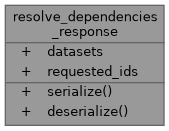
Public Member Functions | |
| std::vector< std::byte > | serialize () const |
| Serialize response to bytes. | |
Static Public Member Functions | |
| static std::expected< resolve_dependencies_response, ores::utility::serialization::error_code > | deserialize (std::span< const std::byte > data) |
| Deserialize response from bytes. | |
Public Attributes | |
| std::vector< domain::dataset > | datasets |
| Datasets in publication order. | |
| std::vector< boost::uuids::uuid > | requested_ids |
| IDs of datasets that were explicitly requested (not dependencies). | |
Detailed Description
Response containing the resolved publication order.
Returns datasets in the order they should be published, with dependencies appearing before the datasets that depend on them.
Member Function Documentation
◆ serialize()
| std::vector< std::byte > serialize | ( | ) | const |
Serialize response to bytes.
Format:
- 4 bytes: datasets count
- For each dataset: (full dataset serialization)
- 4 bytes: requested_ids count
- N * 16 bytes: requested_ids (UUIDs)
Member Data Documentation
◆ datasets
| std::vector<domain::dataset> datasets |
Datasets in publication order.
Dependencies appear first, followed by datasets that depend on them. Includes both explicitly requested datasets and their dependencies.
◆ requested_ids
| std::vector<boost::uuids::uuid> requested_ids |
IDs of datasets that were explicitly requested (not dependencies).
This allows the client to distinguish between requested datasets and automatically included dependencies in the UI.