Tenant lifecycle status definitions. More...
#include <tenant_status.hpp>
Collaboration diagram for tenant_status:
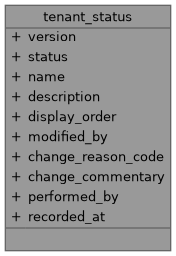
Public Attributes | |
| int | version = 0 |
| Version number for optimistic locking and change tracking. | |
| std::string | status |
| Unique status code. | |
| std::string | name |
| Human-readable name for the status. | |
| std::string | description |
| Detailed description of the status. | |
| int | display_order |
| Order for UI display purposes. | |
| std::string | modified_by |
| Username of the person who last modified this tenant status. | |
| std::string | change_reason_code |
| Code identifying the reason for the change. | |
| std::string | change_commentary |
| Free-text commentary explaining the change. | |
| std::string | performed_by |
| Username of the account that performed this operation. | |
| std::chrono::system_clock::time_point | recorded_at |
| Timestamp when this version of the record was recorded. | |
Detailed Description
Tenant lifecycle status definitions.
Reference data table defining valid tenant lifecycle statuses. Examples: 'active', 'suspended', 'terminated'.
Tenant statuses are managed by the system tenant and control tenant access and capabilities.
Member Data Documentation
◆ status
| std::string status |
Unique status code.
Examples: 'active', 'suspended', 'terminated'.
◆ change_reason_code
| std::string change_reason_code |
Code identifying the reason for the change.
References change_reasons table (soft FK).