Calibrating a synthetic feed: from fixings to a reviewed run
Table of Contents
1. Summary
A synthetic FX feed takes its starting level, the spread of its mixture and its GJR-GARCH daily variance from public fixings, through one calibration run of its asset class. The run resolves each feed's fixing item under the class policy, measures the level and the spread, and, for a GJR-GARCH feed, captures the variance window of the same item and fits it. The variance is never used as fitted: the fit is stored as a proposed calibration, a person approves or rejects it with a reason, and a feed runs only the approved calibration of its pair, which its configuration names. Every step is a stored, versioned record, so a run can be traced back through its calibration and the input it was fitted from to the fixings that made it.
2. Detail
2.1. One run calibrates the class
The calibration run, synthetic.v1.ops.calibrate_feeds, is the one action that
calibrates an asset class, from the Calibration screen or the API. It reads the
class's calibration policy, then walks every feed of the class, or the one feed
it is asked for. A preview reports what it finds and stores nothing; an applied
run, which only the system tenant may make, writes what it finds.
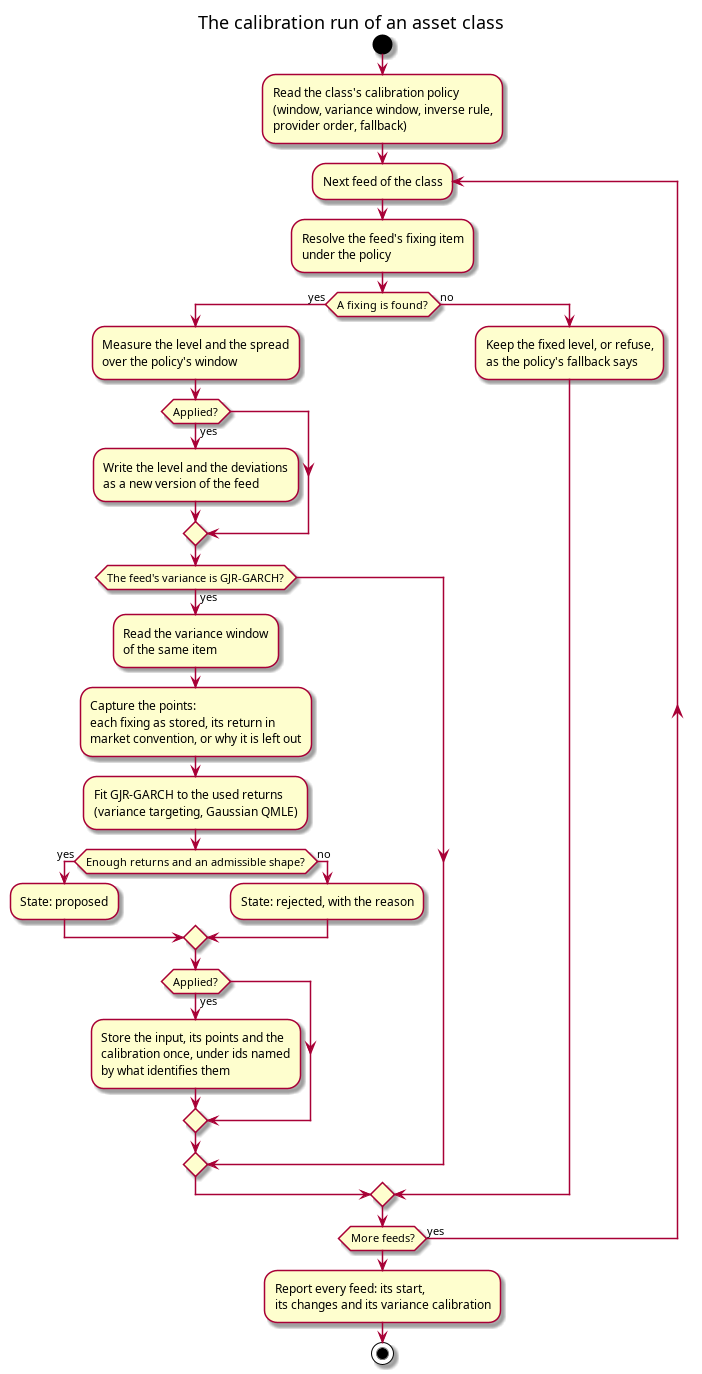
Figure 1: The calibration run of an asset class, for one feed and for its daily variance.
For each feed the run resolves the fixing item the feed starts from, ordered by the policy's provider order and allowed to be read inverted when the policy says so; see Synthetic prices are calibrated from free public sources. It measures the level and the spread of the mixture over the policy's window, and an applied run writes them as a new version of the feed.
A feed whose variance follows a GJR-GARCH is calibrated a second time from the same item. The run reads the policy's variance window, five years by default, and captures it as an input: every fixing date of the window is a point, holding the fixing as stored, its daily log return in the pair's market convention, and, when the point is left out, why. The fit reads only those points, by variance targeting and Gaussian quasi maximum likelihood, as Volatility clustering and GARCH models describes. An input with fewer than 250 returns, or one no admissible shape fits, gives a rejected calibration with the reason; any other fit gives a proposed one, with the evidence a reviewer judges it by: the shape, its persistence under the feed's mixture, the long-run and starting variance, the likelihood, and whether every start of the simplex reached the same optimum.
An applied run stores the input, its points and the calibration once each, under an id named by what identifies it: the input by its party, item and window, the calibration by its input, the method's version and the feed's mixture. A run made again finds the records it made and writes nothing, and it never reopens a calibration a person has decided. A preview reports a stored calibration as stored, with its id, so the screen reviews the record an earlier run kept.
2.2. The policy or a person decides the variance
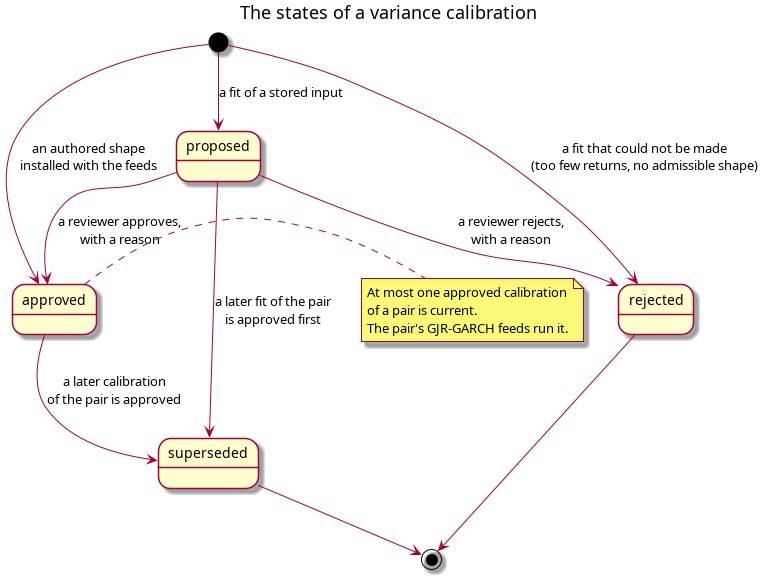
Figure 2: The states of a variance calibration.
Who decides is the class policy's approval mode. In manual mode a proposed
calibration waits for a person with the review permission, which the Trading role
holds. In auto mode, the seeded FX policy's, the policy decides each fit an
applied run proposes against its rules: at least 250 returns, starts that agree, a
persistence from 0.80 to 0.995, and an average reaction, alpha plus half of
gamma, of at least 0.01. Each class's policy holds its own values, and a change to
one is a new version of the policy.
A fit that passes is approved through the same review a person uses, with the
reason "Approved by the fx calibration policy" naming the policy, its version and
each check it passed. A fit that fails stays proposed, and its reason names each
rule it failed, such as "Waits for review: its starts disagree"; it waits for a
person, and its pair keeps the shape it runs. A stored proposal is judged again
on each applied run, so a repeat converges. Approving or rejecting by hand, with a
reason, is synthetic.v1.ops.review_variance_calibration; each decision, the
policy's or a person's, is a new version of the calibration under the change
reason system.review, so its history shows who decided what, when and why. The
policy page states the mode and the rules.
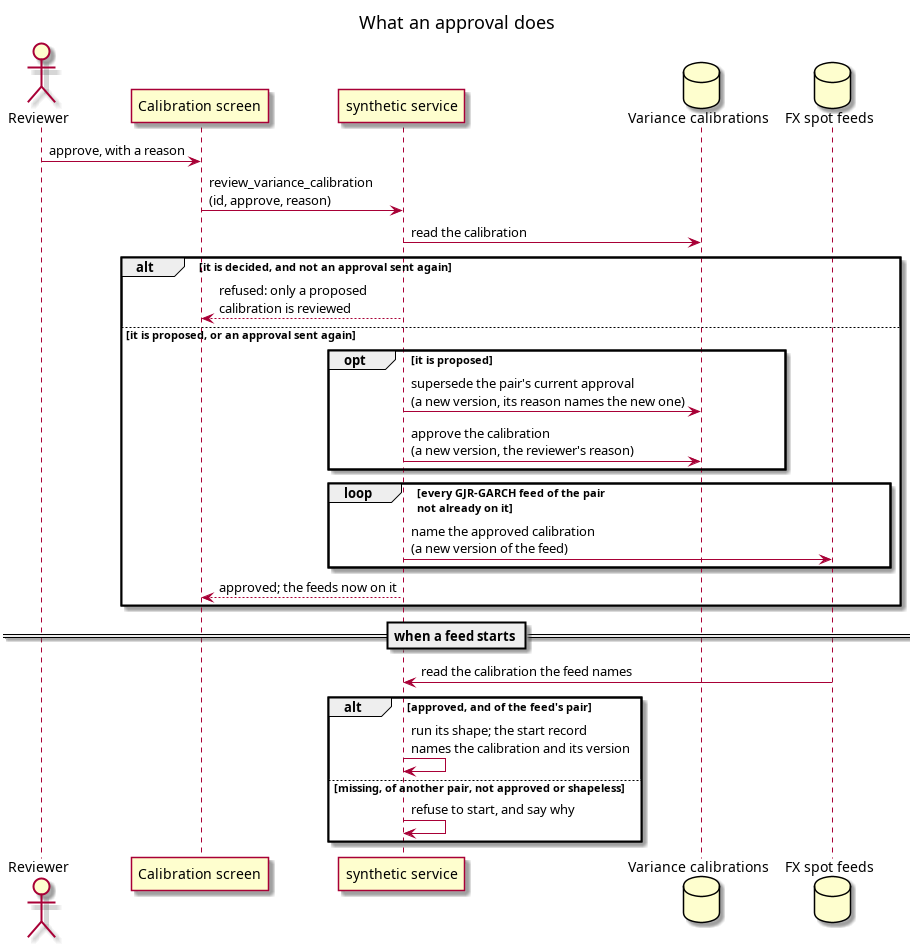
Figure 3: What an approval does, and what a feed reads when it starts.
A pair has at most one approved calibration at a time. Approving one supersedes the pair's earlier approval, approves the new one, and names it on every GJR-GARCH feed of the pair, each as a new version of the feed. Each step reads what is stored before it writes, so an approval that stopped part way is completed by sending it again. Rejecting moves no feed.
2.3. A feed runs only what was approved
A GJR-GARCH feed's configuration names the calibration it runs. When it starts, it reads that calibration and fits nothing. A calibration that is missing, of another pair, not approved or without a shape refuses the start, and the person who started the feed reads why. A run's start record names the calibration and the version it read, and states the persistence under the feed's own mixture.
A fresh installation runs reviewed shapes from its first start: publishing the system feeds installs, for each pair that has none, the authored shape of the feed data as an approved, authored calibration, and names it on the pair's feeds. A later approval replaces it, and publishing again keeps the later one.
2.4. Every number traces to its fixings
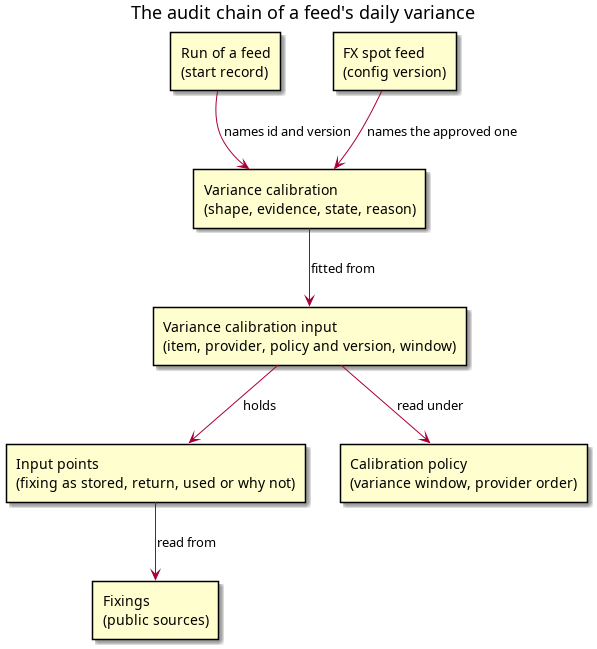
Figure 4: The audit chain of a feed's daily variance.
The chain reads from a run to the calibration it names, to the input that calibration was fitted from, to the points of that input, to the fixings they were read from, and to the policy and its version they were read under; and from a calibration back to the feeds that name it. On screen, a feed's Calibration tab holds the run in four cards: the start level in the pair's market convention, with the fixing, its provider and its orientation; what the fixing window measured; the daily variance, as a table of the GJR-GARCH parameters; and the calibration the run used, whose id links to the feed's calibration page. When the config names a newer calibration than the run used, the card says so and a restart runs it. A run that took no fixing records the level it kept, so the card states the level the run began at even after a later calibration moves the config's level.
The history reads the whole process before and after approval. A feed's History tab holds the feed's versions and its mixture's, and also every variance input and variance calibration of its pair: the input a run captured, the fit it proposed, the reviewer's decision, and the calibration an approval superseded. Each entry names who made it, when, under which change reason, and its commentary. The commentary states the outcome: the input names the fixings it captured and how many are usable as returns; the calibration names its shape and says that it waits for review, or why the fit was rejected; and the feed's own calibration entry names the GJR-GARCH outcome beside the level it moved.
Approving a fit also closes the pair's proposals that are older than it: they are superseded with a reason that names the approved fit, because approving one of them later would replace a fit of later fixings. A proposal made after the approved fit stays open.
A proposed calibration changes no feed until a person approves it, so every screen that shows the pair says when a fit waits for review: the class list counts the fits that wait, and the feed's Calibration tab and its calibration page state the calibration that waits and lead to its review. The review is attached to the stored calibration, not to a preview, so a newer fixing that moves the preview leaves the stored fit reviewable.
The calibration page draws two charts. The first is the daily volatility a fit expected over its input, beside the size of each day's move and the long-run level. It is computed in the browser from the stored points and the stored shape with the fit's own recursion, and the variance after the last return over the long-run level must equal the stored first-day ratio; a series that does not is reported, not drawn as if it matched. The second is the pair's calibrations over time, one small chart for each of alpha (α), gamma (γ), beta (β) and persistence, beside a table of every calibration with its state, method and reason. On the Calibration screen the class list shows each feed's variance calibration and its state, and a feed's Variance tab shows the whole calibration, its input and the review.
The script projects/ores.sql/utility/audit_variance_calibrations.py checks the
stored chain against what it should hold: every input's points and counts, every
return against its fixing, every calibration's evidence against its method and
state, one approval per pair, and every GJR-GARCH feed on the approved calibration
of its own pair.
3. See also
- Volatility clustering and GARCH models – the model, the fit and the stored stages.
- Synthetic prices are calibrated from free public sources – where the fixings come from.
- Variance Calibration Input, Variance Calibration Input Point and Variance Calibration – the records.