Regulatory Functions
Table of Contents
1. Summary
A regulatory function is one of the functions a regulator must discharge in order to regulate: it sets a goal, senses the state reached, acts, holds a model of what it regulates, and commands sufficient variety. Cybernetics states the general notion, and The Cybernetic Skills Framework derives the seven from the primitives of a control loop.
This document classifies the project's documents by the function each supplies. It states the criterion behind that classification and defends it, sets out the seven functions and which document types implement each, and closes with the procedure that assigns a new artefact among them.
2. Detail
2.1. Artefacts, Documents and Targets
Before we proceed, it is important to clarify the terminology.
An artefact, in the sense MASD gives the word, is a file or a directory belonging to a software project. The regulatory functions classify a subset of the project's artefacts: those the skills catalogue holds. Every one of them is a document, so within this page artefact and document may be read interchangeably; the wider term is retained because the classification would apply equally to a non-document file were the catalogue ever to hold one.
A target is what an action acts upon, and targets are broader than artefacts. A task and an entity model are artefacts, being files. A branch, a pull request, a service and a failing test are targets and are not artefacts, since none is a file or a directory. Targets are therefore never classified into regulatory functions: the criterion below asks what relation an agent bears to a thing, and an agent neither loads nor cites nor sequences a branch, it acts on one. Skill dispatch treats targets and the operations registered against them.
A document type classifies a document by its contract: the frontmatter it carries, the sections it must contain, its lifecycle and its location. This is orthogonal to the regulatory function, which classifies by the agent's relation, and the two stand in a many-to-many relation. Loading spans several document types, knowledge, recipe and memory among them, while the skill document type spans three functions, since a skill may be a principle, a method or an action. The regulatory function cannot therefore be inferred from the document type, which is why the definition requires it to be declared. Document Types carries the type ontology.
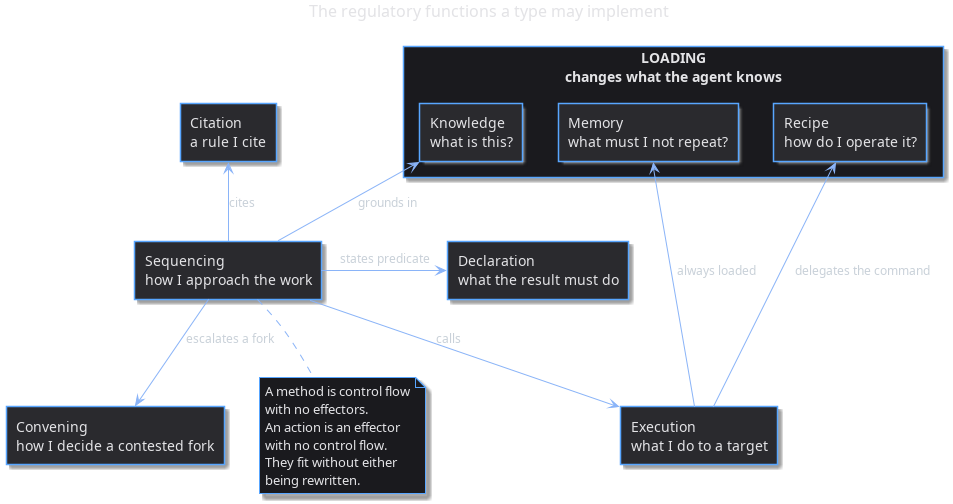
Figure 1: The regulatory functions a type may implement.
2.2. The Classification Criterion
The classification is not freely chosen. Skills in the Compass Skill Framework defines a skill as one action applied to one typed target, at a stated level, in exactly one regulatory function, and derives the last of those clauses from a limitation of the specification: a construct admitting only executable instructions has no place for a rule that is cited rather than run, nor for an approach to a class of work that issues no command of its own. The regulatory function clause repairs that omission, and the present document supplies the taxonomy the clause presupposes.
What remains open is which classes the taxonomy should contain, and on what basis. A taxonomy is answerable to the question it is built to serve. The question here is what an agent should do with an artefact it has encountered, and that constrains the choice of criterion more than it might appear.
Classification by subject matter cannot answer it. Knowing that a document concerns interest rate curves says nothing about whether the agent should read it, follow it, or run it. Classification by author or by age fares no better. The classification must be by the relation the agent bears to the artefact, because that relation is precisely what the agent does with it, and a classification by what an agent does is directly actionable where a classification by what an artefact contains is not.
2.2.1. Methodological Precedent
MASD asks two questions of any corpus of hand-written material: which of its structure is mechanically reproducible, and what should replace that structure once it has been found. Code generation is the setting in which the questions were posed rather than their content, and they survive being asked of another population of artefacts.
The skills catalogue is such a population. MASD therefore supplies a method rather than a conclusion, and that distinction governs what follows: the analysis transfers whole, and Divergence in the Remedy sets out where the remedy does not.
MASD's physical modelling process runs in five stages. It samples representative hand-written artefacts, decomposes each into its parts, classifies those into parts and facets, reconstructs each recurring pattern as an archetype, and catalogues the archetype with its variability exposed.
The analysis behind this framework ran the same five stages over a different population, our own catalogue together with three published collections. It decomposed each skill into the judgement, sequence, command and fact it carried, classified those into regulatory functions, reconstructed the uniform cases as a computed table, and catalogued the result with the declarations that parameterise it.
Three findings follow, each a MASD construct instantiated in the new population.
- Regulatory Functions and facets. MASD defines a facet as "an arbitrary partitioning/taxonomy of the logical space", classifying entities "by the role each artefact plays". A regulatory function is a construct of the same kind on a different axis: it classifies by the agent's relation to an artefact rather than by the artefact's place in the physical model. MASD's description of the facet as arbitrary applies to it unchanged, so a taxonomy of this kind is stipulative rather than descriptive, justified by what it makes possible rather than by correspondence to a natural kind in the material. The two differ in exclusivity: a facet partitions, while regulatory functions are not mutually exclusive and one type may carry several.
- Addressing. MASD addresses an artefact by a four-segment path,
[technical space].[part].[facet].[archetype], so that its location follows from its classification rather than from memory. The framework addresses an operation by the pair of target type and verb for the same reason, and Skill dispatch treats the consequence. - Schematic and repetitive patterns. MASD's central construct is the Schematic and Repetitive Pattern in Physical Space: content that "varies predictably across entities but is otherwise mechanically identical", and is therefore generated rather than written by hand. Write \(T\) for the set of target types and \(V\) for the set of verbs. A catalogue holding one document for each admissible pair in \(T \times V\) is such a pattern, since those documents differ only in the two coordinates that index them. The limitation the definition addresses is consequently an SRPP in the skills catalogue, and it is the finding on which the framework's response turns.
The test is operational in both cases. MASD holds that "one determines if a physical pattern is schematic and repetitive by reproducing it by automated means"; the framework holds that a verb table which cannot be generated is a table that should not be built.
2.2.2. Divergence in the Remedy
The two diverge over what to do once the pattern has been identified. MASD resolves an SRPP by generating the instances, which thereafter exist as files. The framework resolves the same pattern by declining to produce the instances at all: the pairing of verb and target type is computed when a target is dispatched, and no skill document is written for any pairing (Skill dispatch).
The divergence follows from the consumer. A compiler is indifferent to how many files it is handed, so materialising every instance costs nothing and buys locality. An agent is not indifferent. Its catalogue is read rather than compiled, and the size of that catalogue is itself the cost, because every entry competes for attention at the moment of selection. Generating one skill for each pairing would reproduce the pattern faithfully and reinstate the very problem the analysis was undertaken to solve.
MASD's own test survives the divergence, since reproduction by automated means is satisfied by computing the pairing as well as by writing it out. What the framework takes from MASD is the analysis: how to recognise mechanically reproducible structure, and how to name the axes along which it varies. Code generation is where the borrowing stops.
One MASD principle bears on the section that follows. Evolve Gradually directs that coverage grow "driven by concrete practice rather than up-front design", which is the ground for declining to claim the six values below are exhaustive.
2.2.3. Regulatory Functions and Facets
If a regulatory function is the same kind of object as a MASD facet, the framework owes an account of why it does not simply declare six facets and stop. There are three reasons, and the first is a matter of fact rather than of theory.
- The Facet Slot
Documents already have facets in this project's physical space. The
ores.docfacet group holds four:ores.doc.knowledge,ores.doc.agile,ores.doc.modelingandores.doc.template. That partition is by area of the documentation, and it is a perfectly good one, but it is not the partition the skills catalogue needs. A second partition of the same artefacts along a second axis cannot occupy the same slot in a four-segment address. - Production and Consumption
The deeper reason is that a facet and a regulatory function are asked different things.
A facet answers a question about production. MASD's physical space describes how artefacts come to exist: one logical entity projects into many artefacts, and the facet records which projection a given artefact is, so that grouping all the artefacts giving a type its serialisation is exactly what a facet is for.
A regulatory function answers a question about consumption. It records what an agent does with an artefact once the artefact exists, which is a property of the reader rather than of the generator.
Both are true of the same file and neither follows from the other. A knowledge document is an artefact of the
ores.doc.knowledgefacet and implements the loading function; the first fact concerns how it was produced, the second how it is used. - Absence of a Mapping
Were the two axes to coincide, one could be derived from the other and only one would be needed. They do not.
Most artefacts of the
ores.doc.agilefacet, being stories and tasks, belong to no regulatory function at all: they are targets that actions act upon rather than members of the catalogue. Conversely one document type spans three regulatory functions, since a skill may be a principle, a method or an action, so a facet-to-trait function would have to be many-valued. And some regulatory function members lie outside the physical space entirely, an Allium specification and the deliberation plugin being neither generated by this project nor addressed within it. - Harmonisation
The framework therefore extends MASD's move rather than duplicating its vocabulary. MASD classifies artefacts by role for the purpose of generating them; compass classifies a subset of the same artefacts by role for the purpose of using them. The method is MASD's, the population overlaps, and the consumer differs, which is why a distinct term is warranted and why the two classifications coexist on the same file without competing.
2.3. The Term
2.3.1. Choice of Term
A document type implements one or more regulatory functions, each declaring the operations available on it. The term is not borrowed; it names what the derivation establishes, and it is answerable to that account rather than to convenience.
Two properties of the classification matter here. A type may implement several functions: a recipe implements loading, being consulted for its command, and execution, its script being run. A classification permitting one membership per type could not express that, and an earlier attempt failed on exactly this case. And an operation whose behaviour does not vary across implementing types is written once rather than once per type, which is what keeps the catalogue from growing as the product of operations and types.
Three alternatives were rejected. Function unqualified collides three ways: the literature on the Viable System Model uses it interchangeably with System for S1 to S5, Liu et al. name their construct a program function, and the project is written in a programming language. Channel carries information and has a capacity in cybernetics, which describes six of the seven but misdescribes execution. Facet is MASD's term for a different partition of the same artefacts, treated above.
2.3.2. Relation to Gibson's Affordances
An earlier framing of this classification was Gibsonian. The connection is recorded because one part of it still does work, and because the difference between the two framings is instructive.
Gibson coined affordance in The Senses Considered as Perceptual Systems (1966) and stated it in The Ecological Approach to Visual Perception (1979):
The affordances of the environment are what it offers the animal, what it provides or furnishes, either for good or ill.
That framing classified an artefact by what it offers an agent. The criterion defended here is different in kind: a document type is classified by the regulatory function it supplies, and the seven are derived from the primitives of a control loop rather than observed in the material (The Cybernetic Skills Framework). The two agree on almost every assignment and disagree on their grounds. A derivation is what the earlier framing lacked, and without one there was no answer to the question of whether some further class existed.
One element survives independently of the framing that carried it. Norman narrowed affordance in 1988 to those possibilities an actor can readily perceive. That narrowing justifies a requirement the framework would otherwise hold without explanation: a regulatory function an agent cannot detect is one it will not use, which is why an artefact must declare what it implements rather than leaving it to be inferred.
2.4. The Seven Regulatory Functions
The criterion admits seven regulatory functions. Each document type offers one
or more, and the assignment is declared in the type's own contract under
Implements :: rather than inferred here.
| Document type | Implements |
|---|---|
| Knowledge, investigation, manual, component | loading |
| Structure note | loading |
| Memory | loading |
| System | loading |
| Meta, decision | loading, citation |
| Recipe | loading, execution |
| Principle | citation |
| Method | sequencing |
| Runbook | sequencing |
| Action | execution |
| Specification | declaration |
| Deliberation | convening |
| Task, story | loading, declaration, recording |
| Sprint, version, capture, design | loading, recording |
| Test scenario | sequencing, declaration, recording |
The skill document type is the exception: a skill implements citation, sequencing or execution according to what it contains, so its regulatory function cannot be inferred from its type and must be declared on the instance. This is the reason the definition of a skill requires the declaration.
An earlier revision named the types implementing loading collectively grounding. That name is withdrawn. Grounding denotes an activity an agent performs, not a class of document, and the set it was taken to name had in any case ceased to be well defined once loading was extended across the catalogue. The set is referred to as the types implementing loading where it must be named at all. Grounding treats the term and the obligation it carries.
The three types that carry most of the weight differ in the condition under which loading occurs: knowledge by relevance to the work, a recipe on demand when a command is needed, and a memory unconditionally.
2.4.1. The Primary Division
The first division the criterion makes is between loading and everything else, and it is the one that carries the most consequence.
An artefact engaged under the loading function contributes to what an agent knows before it decides anything, and it carries no procedure of its own. An artefact engaged under any of the other five contributes to what the agent does, and it always carries one. Loading is therefore the only regulatory function that changes the agent rather than the work.
2.4.2. Plurality
An artefact may offer more than one regulatory function, and the recipe does. This is a consequence of the term rather than an exception to it: a regulatory function is a relation, and nothing prevents an artefact standing in several.
The framework requires only that every artefact offer at least one, which the criterion guarantees, since an artefact standing in no relation to an agent has no place in a catalogue an agent uses. It does not require that the offers be disjoint, and a partition would be the stronger claim it does not need.
The router is a second plural case. It declares a System, matches a method and dispatches, so it is engaged under sequencing and under execution at different points in its own operation.
2.5. The Document Types
Each type is treated below under the regulatory function it offers, with attention to the pairs most easily confused.
2.5.1. Loading
The types below supply the material an agent brings into working knowledge before it acts, and the process of doing so is grounding. They differ in the question each answers and in the condition under which each is read, and the distinctions are necessary ones: a framework that treats them alike cannot say when each should be consulted.
- Knowledge
A knowledge document states a durable fact about the domain or the system: what a thing is, how it behaves, and why it is so. It is descriptive. Its claims are answerable against the world, and where the world and the document disagree it is the document that is wrong. Knowledge is atomic, addressed by identifier, and outlives any sprint, which distinguishes it from every artefact scoped to a piece of work.
Knowledge loads by relevance. An agent about to touch interest rate curves loads the curve cluster and nothing else, which is only possible if something can tell it which cluster that is. That is what a structure note does, and the Zettelkasten page records the discipline.
- Recipes
A recipe states how one operation is performed in this system. It is operational where knowledge is conceptual, and it is invariant: the same steps produce the same result on every run, so its correctness is a property of the system rather than of the situation in which it is invoked. A recipe carries a runnable script and is tested, which is what allows a reviewer to re-run it rather than take a claim on trust.
Recipes load at the moment an action needs a command. Their fuller role, and the boundary that separates them from methods, is set out under Methods and recipes below.
- Memories
A memory records a correction that must not be repeated. It is prescriptive where knowledge is descriptive: it does not describe the world but constrains the agent's behaviour in it, and it is written because something went wrong once. The catalogue is Project memory.
Memories load unconditionally, in every session, whether or not the work touches what they concern. That is what makes them expensive in a way the other two are not, and it is the argument for keeping them scarce: a memory is paid for by every session, so each one competes for attention with every other. A correction that applies to one domain is better recorded as knowledge in that domain and reached when the domain is.
- The Grounding Obligation
A knowledge document is not an accompaniment to the work. It is the agent's model of the domain it is regulating. Beer's argument transfers without modification. A regulator requires a model of the system it regulates, and an agent that has not loaded one lacks the variety to act well within it. The failure this produces is characteristic: the agent does not stall or refuse, it produces something fluent and wrong, and it has no means of noticing.
Grounding is therefore a precondition of the work rather than an adjunct to it. Every method opens by naming the domain concepts its work touches and resolving each to a knowledge document or a structure note. A concept that resolves to nothing is a knowledge gap, and on domain-related work closing that gap is the first task, ahead of design and ahead of code. A method that proceeds without grounding records the omission and its reason, in the same way any other skipped phase is recorded.
2.5.2. Citation
A stance is a general rule of judgement. It constrains how a choice is made without prescribing what is done, which is why it has no procedure and produces no artefact: there is nothing in a stance to execute. An agent invokes one by citing it against a specific decision, and the citation is admissible only when it names the choice the rule changed. A principle cited without an accompanying decision records nothing and may be disregarded.
Two contrasts fix the boundary. A stance differs from a method in that a method orders actions through time whereas a stance constrains the choices made within them; the two compose, and a method's phases routinely cite several. A stance differs from a recipe in that a recipe is executed and leaves the system changed, whereas a stance leaves no trace except in the reasoning that produced a decision.
Citation is the one place where an artefact that cannot be run is nevertheless a skill. That exemption is deliberate and narrow: a principle which cannot be loaded by name cannot be cited by a method, and a rule that cannot be cited cannot be shown to have been applied.
The academic literature reviewed in Skills in the Compass Skill Framework bears on this regulatory function, and it does not favour it. That review finds a rule expressed as text states what an agent should do in principle without stating when it applies, and reports such rules being disregarded in practice. The regulatory function is therefore constituted as a residue rather than as a preference: a rule that can be expressed as a check, whether a lint, a validator or a test, is written as one and does not enter the regulatory function, which holds only what cannot be checked. A stance regulatory function that fails to shrink as checks accumulate is evidence that the requirement is not being applied.
2.5.3. Sequencing
A method is an ordered sequence of phases carrying a piece of work from an unverified beginning to a verified end. It is defined over a shape of work — a defect to be diagnosed, a behaviour to be added, a structure to be changed — rather than over any particular artefact, and it therefore names no specific command. A method is control flow without effectors.
Indexing by shape of work is the axis on which the pstack collection organises its entire catalogue, as the review of industrial collections in Skills in the Compass Skill Framework records. Here it governs one regulatory function among six, the artefact axis being carried by actions, so the two axes compose rather than compete.
The phases of a method are adaptive rather than fixed. Which of them run and in what order depends on what the work reveals as it proceeds, so a method's correctness is a property of the judgement it encodes rather than of the system it runs against. This is the principal difference between a method and a recipe. The two are treated together below, since the distinction between them accounts for most misclassification in practice.
A recipe answers how is this operation performed here? A method answers how is this class of work approached? From that difference the rest follows.
| Recipe | Method | |
|---|---|---|
| Question | How is this operation performed? | How is this class of work approached? |
| Scope | One operation | One shape of work, many operations |
| Content | Commands and a script, tested | Phases, gates and judgement |
| Behaviour | Invariant: the same steps every run | Adaptive: steps follow what the work reveals |
| Correctness is a property of | The system | The judgement |
| Fails when | The underlying command changes | The shape of the work was misjudged |
| Example | How is a pull request merged? | Diagnose a defect, then fix it |
Two tests settle any case that remains unclear. The first is determinism: where the steps are the same on every run the artefact is a recipe, and where they depend on what is found it is a method. A method that never branches is a recipe that has acquired phases it does not need; a recipe qualified throughout by "it depends" is a method that has not yet been written.
The second test is direction of dependence. A method's phase cites a recipe; a recipe never cites a method. Where a recipe finds itself explaining when it should be run, judgement has leaked downward and belongs to a method. Where a method finds itself spelling out a command, an effector has leaked upward and belongs to a recipe.
2.5.4. Execution
An action is a single operation applied to one typed artefact, together with the judgement governing its use: what must hold before it runs, what state it leaves behind, and what to do when its guards refuse. The command it issues belongs to a recipe, which the action delegates to; what the action itself owns is the decision to issue it.
Recipe, action and method therefore divide cleanly. A recipe holds the command, an action holds the judgement about that command, and a method holds the sequence in which such judgements are made. Each has exactly one source of truth, and drift in any of them has exactly one place to appear.
Actions are the regulatory function where uniformity is worth exploiting. Where a verb behaves the same way across artefact types it becomes a single skill driven by a generated type table; where its procedure genuinely differs per type it keeps a skill of its own. The test is whether the procedure differs, not whether the artefact does.
2.5.5. Declaration
A specification states intended behaviour in a form a machine can check, and from which tests are generated. Its defining property is that it is normative: it says what the system ought to do, which is what separates it from knowledge, whose claims are descriptive. The consequence matters. Where a knowledge document disagrees with the system the document is wrong and is corrected; where a specification disagrees with the system, which of the two is wrong is an open question, and the disagreement is a finding rather than an error.
That property is what allows a specification to make a method's definition of done falsifiable rather than rhetorical. A method's framing phase writes or extends a rule; its verification phase runs the tests propagated from that rule. In this project specifications are written in Allium.
2.5.6. Convening
Deliberation is the procedure by which a contested judgement is settled when the available evidence cannot settle it. A method convenes one at a fork it cannot resolve, and the product is a verdict recorded against the work, never a silent change to the code.
The contrast with verification is what fixes deliberation's place. Verification establishes whether a claim is true and is answerable by a checker; deliberation decides what should be done where no checker can yet answer, and its output is a reasoned position rather than a fact. Confusing the two in either direction is costly. Sending a checkable question to deliberation wastes it, and sending an unanswerable one to a checker produces a confident verdict with nothing behind it.
Deliberation in this project is provided by the Council of High Intelligence, consumed as an external plugin. Its instrument is a panel of analytically distinct personas, and the limitation that follows should be stated wherever it is relied upon: personas vary framing but share the priors of the single model beneath them, so deliberation is a strong instrument for surfacing a tradeoff and a weak one for detecting an error. Error detection routes instead to the checkers set out in Verification and evaluation, which do not share those priors.
2.6. Actions and Regulatory Functions
A regulatory function is a property of an artefact, not of an act. Any single act therefore touches at least two of them, one on each side, and confusing the two sides is the commonest way to misread this taxonomy.
Consider an agent closing a task. It engages the skill compass-agile-close-task under
that skill's execution regulatory function: running the skill is the agent's
relation to it. The skill's effect engages the task under the task's
recording regulatory function: the state moves to DONE, the result is
written, the story's table is synced. Execution is the agent's relation to the
action; recording is the action's relation to the task.
The general shape is that an agent executes an action, and the action engages a regulatory function of its target.
Creation is the case that separates two things the framework has otherwise been able to treat as one.
An action has a target, whose regulatory function it engages. It may also have an output, which is a new artefact. For most actions the two coincide closely enough to be ignored: closing a task targets that task and produces nothing new. For creation they diverge, and must.
An agent adding a task executes compass-doc-add. Its target is the story, not
the task, which is why compass add task takes the parent as an argument. The
regulatory function engaged is the story's recording: its table of tasks gains
a row, which records that this work now exists. The new task document is the
action's output.
The reason the distinction is forced rather than merely tidy is that nothing can offer a relation before it exists. A target must be present for its regulatory functions to be engaged, so a creation verb cannot take as its target the thing it creates. It takes the container instead, and Skill dispatch offers creation verbs against the container's type for the same reason.
2.7. Recording and Editing
Two regulatory functions concern acting on an artefact rather than consuming it, and the distinction between them is easily missed.
2.7.1. Recording
An artefact implements recording when it carries a lifecycle that an agent
advances. A task moves from BACKLOG through STARTED to DONE and receives a
Result when it closes; a capture moves between the backlog's folders as its
disposition is settled. Advancing the artefact is not incidental to it. It is
what the artefact exists for, and it is how the state of work is held.
The regulatory function has a mechanical test, which is why its assignment is checkable rather than a matter of judgement: a type implements recording when it declares a lifecycle, whether as a TODO vocabulary in its frontmatter or as a position among folders. Task, story, sprint, version and test scenario declare the first; capture uses the second. Knowledge, recipes, runbooks, memories and skills declare neither and afford no recording.
Recording pairs against declaration rather than duplicating it. A declaration states what ought to be true, which for a task is its acceptance criteria. A recording captures what happened: the state reached, the result written, the plan as it was actually worked.
2.7.2. Operation
Every artefact additionally offers being operated on: edited, moved, renamed, deleted. That regulatory function is universal, and a property every member of a population shares carries no classificatory information, which is why it is absent from the seven above.
It is not absent from the framework. Operating on an artefact is what an action does, and the population an action may operate on is wider than the population classified here, since it includes targets that are not artefacts at all. Skill dispatch treats that population and the operations registered against it.
2.8. Placement
The regulatory functions above give the taxonomy. This procedure applies it. Take the first match.
The placement procedure. Take the first match.
- A durable fact about the domain goes to a knowledge document. If it is the entry point to a cluster, a structure note.
- An account of how one operation is performed here, with a runnable script, goes to a recipe. This is also where a method's missing effector goes.
- A correction that must not be repeated goes to a memory. Keep these scarce: each is paid for by every session.
- A rule that is cited rather than run goes to a principle.
- Intended behaviour that should be checkable goes to a specification.
- A sequence of phases ending in a verified state, not tied to one artefact type, goes to a method.
- A change to a generated artefact goes to its model or its template, never to the output.
- An operation on one artefact type goes to an action, at the pairing of type and verb. The action holds the judgement; the recipe holds the command.
- A contested judgement goes to deliberation, and its verdict is recorded against the work.
- A role a session or a delegate acts as goes to a System, tagged by level, stating what it must read first and what it may do.
- The argument for a change, spanning many tasks, goes to a design in the story's own folder rather than to the durable tree.
2.9. Inventory
Every skill grouped by the regulatory function it offers. Not yet written: the classification exists per skill but nothing derives the grouping. The catalogue in Skills groups by domain in the meantime.
3. See also
- Skill architecture — the overview this page sits under.
- Skill dispatch — how a verb is selected for a target.
- Zettelkasten — the discipline the knowledge regulatory function is held under.
- Project memory — the memory catalogue.
- Recipes — the recipe catalogue.