ORE Studio Utility Component
Foundation utilities used across all ORE Studio components.
Component Architecture
Diagram:
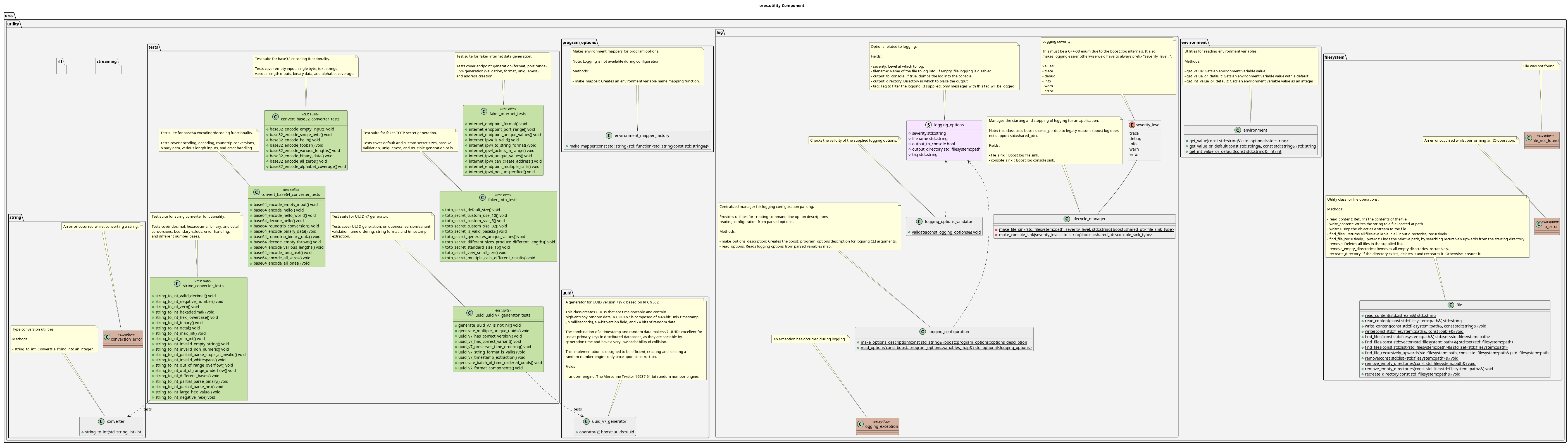
Figure 1: ORE Studio Utility Component Diagram
Provides core infrastructure and helper functions that don't fit into domain-specific modules. Key namespaces:
- converter: Base64 and Base32 encoding/decoding utilities
- datetime: Date/time formatting and parsing utilities
- faker: Test data generation (TOTP secrets, datetime, network endpoints)
- geo: IP geolocation services using MaxMind database
- program_options: Environment variable mapping for Boost.Program_options
- rfl: Custom reflect-cpp reflectors for common types (UUID, time_point, IP address)
- streaming: iostream operators for std types (vector, optional, time_point, uuid)
- string: Type conversion and string manipulation utilities
- uuid: UUID v7 generation for time-ordered unique identifiers
- version: Application version utilities
| Namespace | Purpose |
|---|---|
converter |
Base64/Base32 encoding and decoding |
datetime |
Time point formatting and parsing |
faker |
Test data generation for testing |
geo |
IP address geolocation lookups |
program_options |
Environment variable to option mapping |
rfl |
Reflection library custom type reflectors |
streaming |
iostream operators for standard library types |
string |
String manipulation and conversion utilities |
uuid |
RFC 9562 UUID v7 generator |
version |
Application version information |
This module has no dependencies on other ORE Studio components, making it the foundation layer upon which all other modules are built.
Note: Database, repository and logging functionality previously in this component have been moved to ores.database and ores.telemetry respectively. Platform abstractions (filesystem, environment, time, net) have been moved to ores.platform.
UUID v7 Generator
The uuid namespace provides a UUID v7 generator based on RFC 9562:
#include "ores.utility/uuid/uuid_v7_generator.hpp"

using ores::utility::uuid::uuid_v7_generator;

uuid_v7_generator gen;
boost::uuids::uuid id = gen();  // Time-sortable UUID
UUID v7 combines a 48-bit Unix timestamp with random data, making them ideal for distributed database primary keys (sortable by generation time with low collision probability).
Base64/Base32 Encoding
The converter namespace provides encoding utilities:
#include "ores.utility/convert/base64_converter.hpp"
#include "ores.utility/convert/base32_converter.hpp"

using ores::utility::converter::base64_converter;
using ores::utility::converter::base32_converter;

// Base64 encode/decode
std::vector<uint8_t> data = {0x48, 0x65, 0x6c, 0x6c, 0x6f};
std::string encoded = base64_converter::convert(data);
std::vector<uint8_t> decoded = base64_converter::convert(encoded);
DateTime Utilities
The datetime namespace provides time point formatting and parsing:
#include "ores.utility/datetime/datetime.hpp"

using ores::utility::datetime::datetime;

auto now = std::chrono::system_clock::now();

// Format as local time
std::string local = datetime::format_time_point(now, "%Y-%m-%d %H:%M:%S");

// Format as UTC
std::string utc = datetime::format_time_point_utc(now);

// Parse string to time_point
auto tp = datetime::parse_time_point("2025-01-15 14:30:00");
Geolocation Service
The geo namespace provides IP address geolocation using MaxMind GeoLite2:
#include "ores.utility/geo/geolocation_service.hpp"

using ores::utility::geo::geolocation_service;

geolocation_service geo("/path/to/GeoLite2-City.mmdb");

auto result = geo.lookup("8.8.8.8");
if (result) {
    std::cout << result->country_code << ", " << result->city << "\n";
}
Faker Utilities
The faker namespace generates test data for testing purposes:
#include "ores.utility/faker/internet.hpp"
#include "ores.utility/faker/totp.hpp"

using ores::utility::faker::internet;
using ores::utility::faker::totp;

// Generate random network endpoint
std::string endpoint = internet::endpoint();  // e.g., "192.168.1.50:8080"

// Generate random IPv4 address
boost::asio::ip::address ip = internet::ipv4();

// Generate TOTP secret for testing
std::string secret = totp::totp_secret();
Reflect-cpp Reflectors
The rfl namespace provides custom reflectors for serialization of common types:
boost::uuids::uuid: Serializes as stringstd::chrono::system_clock::time_point: Serializes as ISO 8601 UTC stringboost::asio::ip::address: Serializes as string (IPv4/IPv6)
| Top: Documentation | Previous: System Model |